
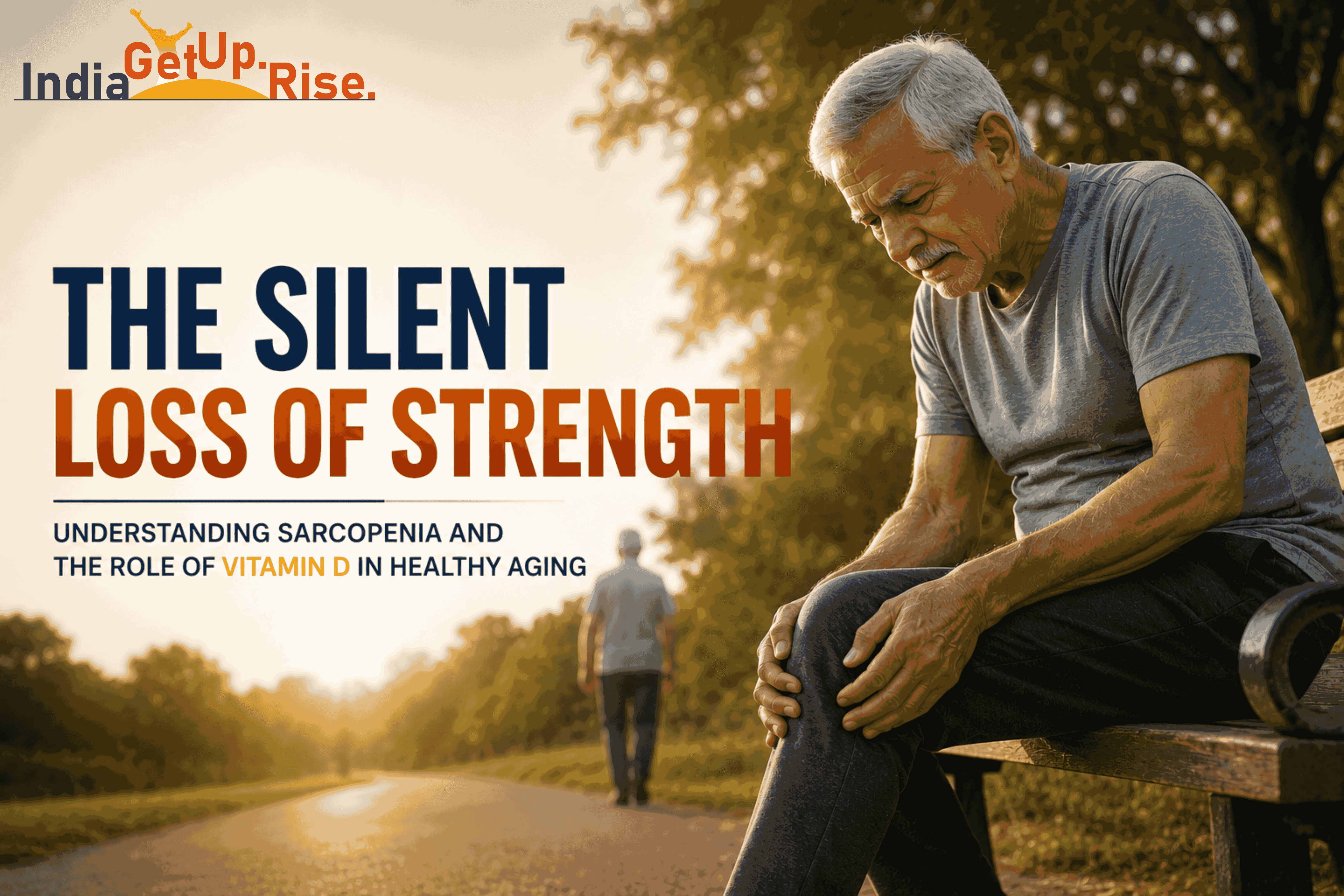
Have you ever stopped to think that one of the greatest dangers to healthy aging is not something that we can physically see- it’s something happening gradually to steal our strength year after year? This reality is made manifest through a condition called sarcopenia, which refers to the natural decline in muscle strength, mass, and function as we age. While sarcopenia was once thought to be an ordinary part of growing older, today it is recognized as its own separate disease of muscle that contributes to a downward spiral of falling, fracturing, disabling, being hospitalized, and ultimately losing one’s independence.
Sarcopenia: More Than Just Muscle Loss
In 2019 the European Working Group on Sarcopenia in Older People (EWGSOP2) once again revised the definition of sarcopenia to differentiate it from other diseases by classifying muscle strength (derived from the handgrip test) as the chief criterion for diagnosing sarcopenia; while the criteria defining the severity of sarcopenia include:
- The quantity of muscle
- The physical performance of the individual
The Numbers Behind the Problem
Adults lose approximately 3–8% of muscle mass per decade after age 30, with losses accelerating to 1–2% annually after age 60. Muscle strength declines even faster than muscle mass.
Why Does It Happen?
In the landmark Health ABC study, which examined more than three thousand individuals aged seventy to seventy-nine years, it was established that muscle strength is a stronger predictor of disability and mortality than muscle mass alone.
Currently, there are estimates that approximately 10% to 27% of older community-dwelling adults experience sarcopenia. Aging muscle cells become less responsive to proteins that stimulate muscle growth.
Simultaneously, the anabolic hormones that are typically produced by the human body (e.g., testosterone, growth hormone, and IGF-1) decrease. Chronic low-grade inflammation caused by aging and loss of motor neurons also negatively impact the ability of the muscle to regenerate, or recover from a workout, produce force, and coordinate with other muscles.
The Vitamin D – Muscle Connection
Researchers have found the presence of Vitamin D Receptors (VDRs) within skeletal muscles, which has confirmed that Vitamin D contributes to more than simply the maintenance of healthy bones.
Sodium that is bound to a receptor for active vitamin D helps support:
- Synthesis of muscle proteins
- Growth and repair of muscle cells
- Communication between nerves and muscles
- Regulation of calcium, which is necessary for muscle contraction
Why Deficiency Matters
Older persons are often deficient in vitamin D, and deficiency is defined as serum 25-hydroxyvitamin D levels <20 ng/mL (50 nmol/L). Research findings has shown that low levels of vitamin D have a excessive negative effect on type II muscle fibres.
These are the fibres that give the body the ability to move quickly and correct its balance when it feels it is about to fall. With vitamin D deficiency these muscles will be at a greater risk of atrophy which translates into slower walking and poorer balance leading to a high risk of falling.
Looking Ahead
There exists clearly defined biological connections (causal relationships) between vitamin D levels and muscle function. In regard to the use of vitamin D supplementation to prevent sarcopenia, is this truly an effective method in preventing sarcopenia?
For years, this question was thought to have a clear answer; but new evidence has brought this belief into question. Recent completed large scale randomized controlled trials (the VITAL Trial with 25,871 subjects, DO-HEALTH Trial with 2,157 subjects and D-Health Trial with 21,315 subjects) produced more complicated results than previously predicted, and indicated that a dose of vitamin D will provide different degree of goodness for each person based on their baseline vitamin D status could be the key to understanding who truly benefits from supplementation.
Conclusion
However, with new evidence showing that maintaining skeletal muscle strength is critical to the ability to remain mobile; have independence and continue to enjoy your quality of life; we have to stop assuming it is just another thing to accept when we get older. Deficiencies in Vitamin D have been associated with weakness and frailty. It is still undetermined whether using or taking Vitamin D supplements will be effective to reverse existing muscle loss. Research is currently underway to determine how effective some of these will be and what evidence, if any, supports the use of vitamin D supplements to prevent sarcopenia.
References
- Cruz-Jentoft AJ, et al. Sarcopenia: Revised European Consensus on Definition and Diagnosis (EWGSOP2). Age and Ageing. 2019.
- Health, Aging, and Body Composition (Health ABC) Study.
- Bischoff-Ferrari HA, et al. Vitamin D and Musculoskeletal Health Research.
- Manson JE, et al. The Vitamin D and Omega-3 Trial (VITAL).
- Neale RE, et al. The D-Health Trial.